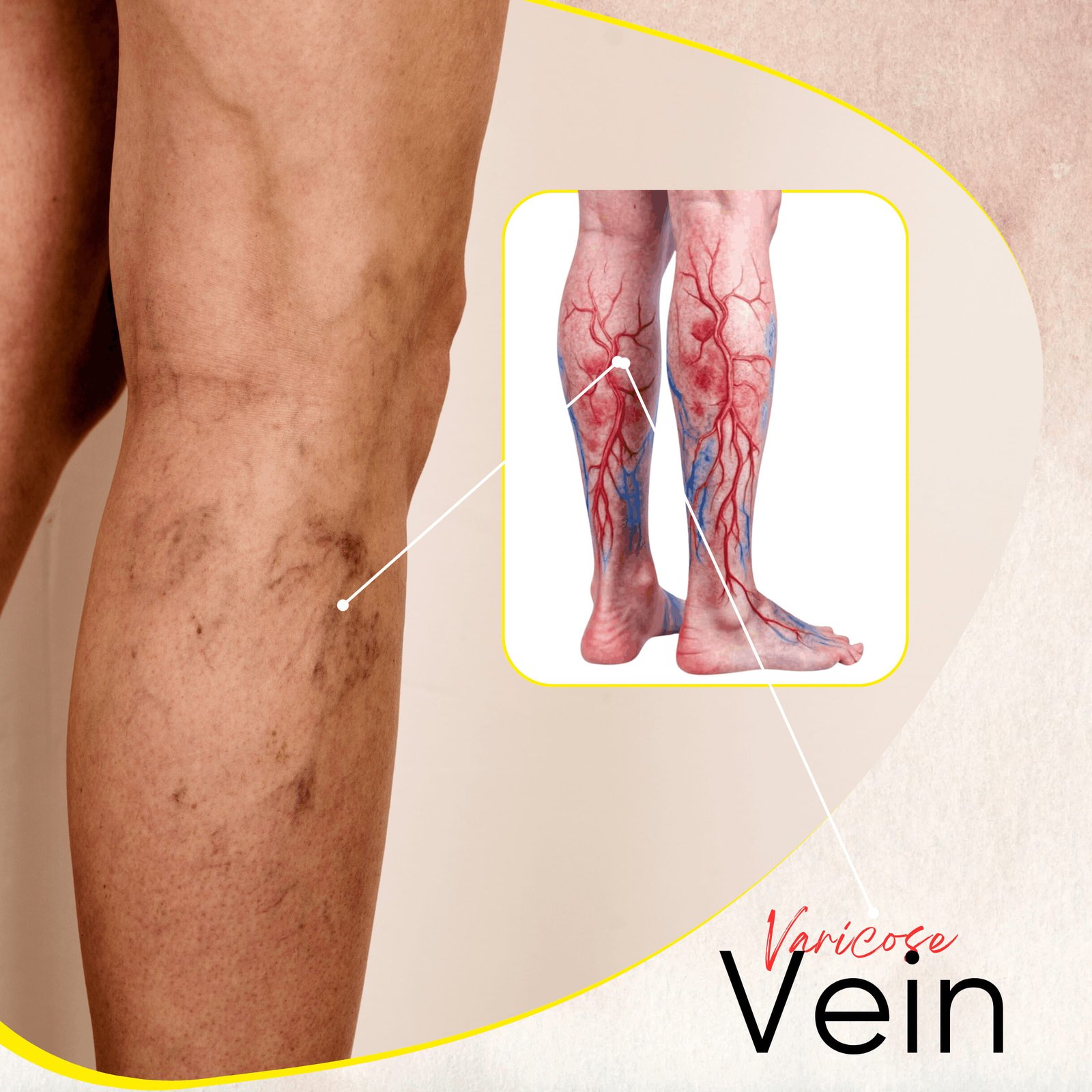
Varicose veins are enlarged, twisted veins that often cause leg pain, heaviness, swelling, and discomfort. Left untreated, they can lead to complications like ulcers or blood clots. In Lucknow, advanced minimally invasive treatments are available, including endovenous laser therapy (EVLT), radiofrequency ablation (RFA), sclerotherapy, and phlebectomy. These procedures are safe, effective, and promote faster recovery with minimal pain. Early diagnosis and treatment improve circulation, relieve symptoms, and enhance the appearance of legs, ensuring long-term vein health.

Common signs and symptoms include.
Enlarged, bulging veins visible under the skin.
Aching or heavy feeling in the legs.
Swelling in the lower limbs, especially after long periods of standing.
Throbbing, burning, or cramping sensations in the legs.
Itchy or discolored skin around the affected veins.
Several factors can contribute to the development of varicose veins.
Age: Vein elasticity decreases with age.
Gender: Women are more prone due to hormonal influences.
Pregnancy: Increased blood volume and pressure on veins can trigger varicose veins.
Obesity: Extra weight puts additional pressure on leg veins.
Sedentary lifestyle: Prolonged standing or sitting can impair blood flow.
Family history: Genetics may increase susceptibility.
Modern varicose vein treatments are minimally invasive, safe, and highly effective. Available therapies include.
Endovenous Laser Therapy (EVLT): A laser is used to close the affected vein from within, redirecting blood flow to healthy veins.
Radiofrequency Ablation (RFA): Similar to laser treatment, this technique uses radiofrequency energy to seal off faulty veins.
Sclerotherapy: A medical solution is injected into smaller varicose or spider veins, causing them to collapse and fade.
Phlebectomy: Small incisions are made to remove bulging veins in a minimally invasive manner.
Compression Therapy: Medical-grade compression stockings can improve circulation and reduce discomfort in mild cases.
Untreated varicose veins can worsen over time, potentially leading to.
Chronic pain and swelling
Skin changes like eczema or pigmentation
Ulcer formation near the ankles
Increased risk of deep vein thrombosis (DVT)
WhatsApp us