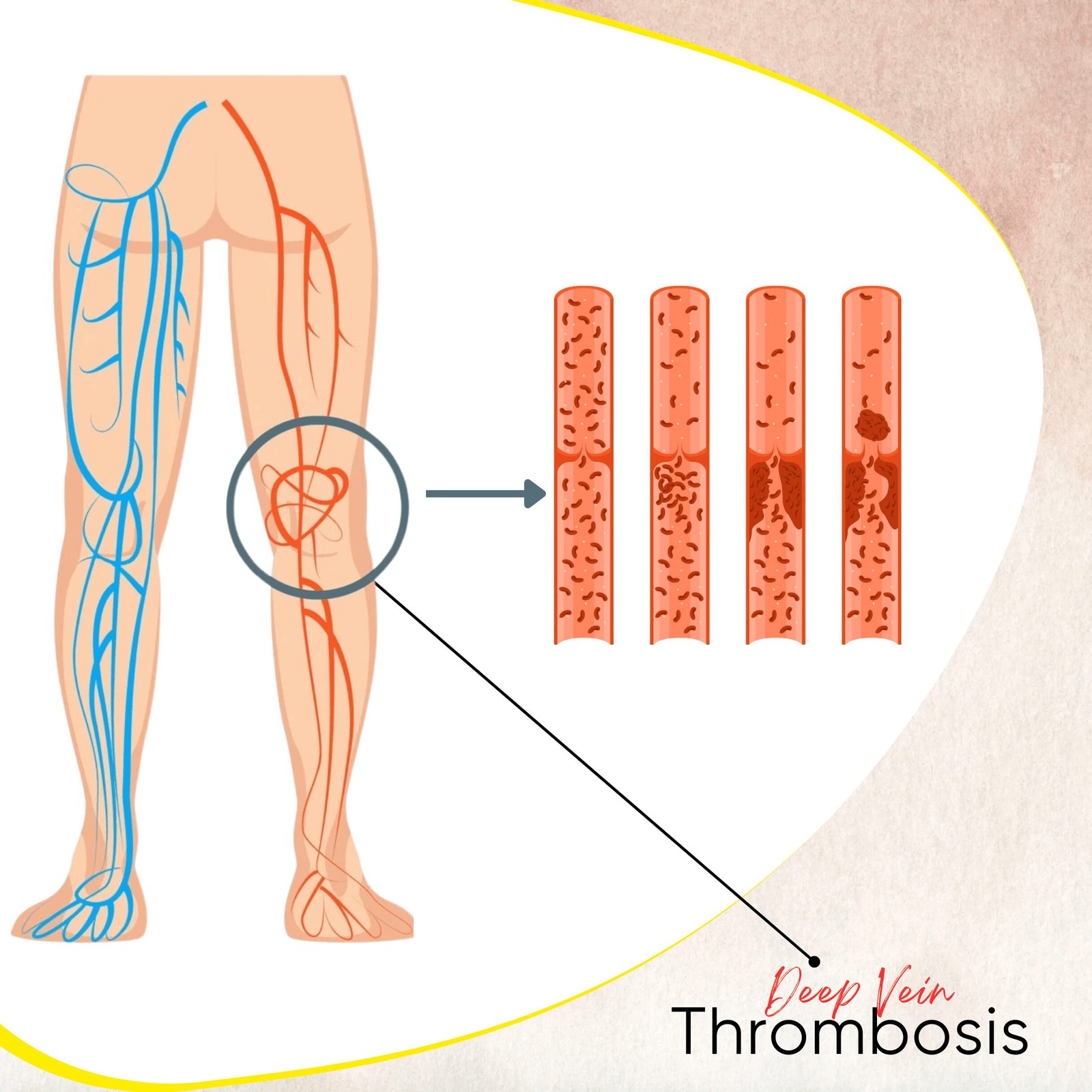
Deep Vein Thrombosis (DVT) is a serious medical condition where blood clots form in the deep veins, usually in the legs. If left untreated, these clots can travel to the lungs and cause life-threatening complications like pulmonary embolism. Early diagnosis and proper treatment are crucial to prevent severe outcomes and improve quality of life.
To diagnose deep vein thrombosis, your doctor will start by asking about your symptoms and medical history. You’ll also have a physical exam so your doctor can check for swelling, tenderness, warmth, or discoloration in your legs.
Depending on how likely it is that you have a blood clot, your doctor may recommend one or more of the following tests:
Ultrasound – The most common test for DVT. It uses sound waves to look for blood clots in the veins.
Blood test – Measures D‑Dimer levels, which can indicate clot formation.
Venography – A special dye is injected to visualize veins and detect clots.
CT or MRI scans – Used in certain cases to examine veins in the pelvis or abdomen.
Early diagnosis is important because untreated DVT can lead to serious complications, including pulmonary embolism. With timely testing, your doctor can create the best treatment plan to reduce risks and protect your vascular health.

 +91-9451534249